
-
OTC
- Allergy
- Antiparasitic Agents
- Painkillers and Antispasmodics
- Venotonics
- Dermatological Agents
- Gastrointestinal Tract
- Immunomodulators
- Infectious and Inflammatory
- Weight Control, Weight Loss
- Neurological Agents
- Ophthalmic Preparations
- Cardiovascular Diseases
- Sleep Aids
- Cold and Flu Remedies
- Thyroid Disorders
- Diabetes Treatments
- Urological Agents
- Sedatives
- Ear Drops
- Vitamins and Minerals
- Men's Health
- Women's Health
- Laxatives
- Liver Disease Treatments
- Hemorrhoid Treatments
- Nasal Drops and Sprays
- Antiseptic
- Bruises and Contusions
- Antifungal Agents
- Blood Pressure Medications
- Joint Pain
- Oils
- Dry Herbs & Berries
- Ointments
- Herbal Teas
- Tinctures
- Syrups
- Beauty
Detralex | Russian Pharmacy USA

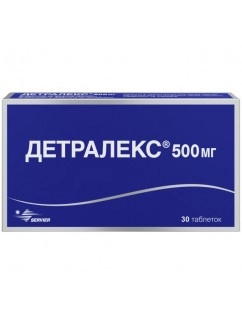

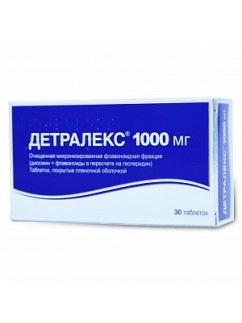
1. What Detralex is and what it is used for
The active substance of Detralex is purified micronized flavonoid fraction (diosmin + flavonoids expressed as hesperidin), which belongs to the pharmacotherapeutic group called "angioprotectors, capillary stabilizing agents, bioflavonoids".
This medicinal product has venotonic and angioprotective properties, reduces venous distensibility and venous stasis, increases venous tone, decreases capillary permeability and increases capillary resistance.
Therapeutic indications
Detralex is indicated in adults for the treatment of symptoms of chronic venous disease (relief of symptoms).
- Treatment of symptoms of venolymphatic insufficiency:
- pain;
- cramps in the lower limbs;
- sensation of heaviness and tightness in the legs;
- "tired" legs.
- Treatment of manifestations of venolymphatic insufficiency:
- swelling (oedema) of the lower limbs;
- trophic changes in the skin and subcutaneous tissue;
- venous leg ulcers.
- Symptomatic treatment of acute and chronic haemorrhoids.
If you do not feel better or if you feel worse during the course of treatment, you must contact a doctor.
2. What you need to know before you take Detralex
Contraindications
Do not take Detralex if you are allergic to purified micronized flavonoid fraction or any of the other ingredients of this medicine (listed in section 6 of the package leaflet).
Warnings and precautions
Talk to your doctor or pharmacist before taking Detralex.
Tell your doctor if you have any of the following conditions:
In the treatment of haemorrhoids, the prescription of Detralex does not replace specific treatment of other rectal or anal disorders. Do not exceed the maximum duration of treatment or the recommended doses stated in section 3 "How to take Detralex". If haemorrhoid symptoms persist after the recommended course of treatment, you should be examined by a proctologist who will prescribe further therapy.
In case of venous circulation disorders, the maximum treatment effect is achieved by combining therapy with additional health measures / a healthy (balanced) lifestyle: avoid prolonged sun exposure and prolonged standing, and it is also recommended to reduce excess body weight. Walking and, in some cases, wearing special support stockings help improve blood circulation.
Children and adolescents
Do not give this medicine to children aged 0 to 18 years, because the safety and efficacy of Detralex in children and adolescents have not been established. No data are available.
Other medicines and Detralex
Tell your doctor or pharmacist if you are taking, have recently taken or might take any other medicines.
Pregnancy and breast-feeding
If you are pregnant or breast-feeding, think you may be pregnant or are planning to have a baby, ask your doctor or pharmacist for advice before taking this medicine.
Pregnancy
As a precautionary measure, it is preferable to avoid taking Detralex during pregnancy.
Breast-feeding
Breast-feeding is not recommended during treatment, as it is unknown whether the medicine passes into breast milk.
Driving and using machines
Detralex has no or negligible influence on the ability to drive and use machines.
3. How to take Detralex
Always take this medicine exactly as described in the package leaflet or as your doctor or pharmacist has told you. If you are not sure, ask your doctor or pharmacist.
Recommended dose
Recommended dose for chronic venous disease: 1 tablet per day, preferably in the morning, with a meal.
The score line on the tablet is only intended to make it easier to break the tablet if you have difficulty swallowing it whole.
Recommended dose for acute haemorrhoids: 3 tablets per day (1 tablet in the morning, afternoon and evening) for 4 days, then 2 tablets per day (1 tablet in the morning and evening) for the following 3 days, with meals.
Recommended dose for chronic haemorrhoids: 1 tablet per day, with a meal.
Route and method of administration
Oral use. Swallow the tablets whole with water.
Duration of treatment
The duration of treatment for chronic venous disease may be several months (up to 12 months). If symptoms recur, the course of treatment may be repeated on doctor's advice.
If you take more Detralex than you should
If you take more Detralex than you should, contact your doctor or pharmacist immediately.
Data on overdose with Detralex are limited, but possible symptoms may include diarrhoea, nausea, abdominal pain, itching and rash.
If you forget to take Detralex
Do not take a double dose to make up for a forgotten dose.
If you have any further questions on the use of this medicine, ask your doctor or pharmacist.
4. Possible side effects
Like all medicines, Detralex can cause side effects, although not everybody gets them.
Stop taking Detralex and seek medical attention immediately if you experience any of the following signs of an allergic reaction, which has been observed with unknown frequency (cannot be estimated from the available data):
- wheezing, swelling of the face or tongue, severe itching or widespread skin rash (angioedema).
Other possible side effects that may occur when taking Detralex:
Common (may affect up to 1 in 10 people):
- diarrhoea;
- sensation of pain or discomfort (heaviness, feeling of tightness, fullness, early satiety) in the abdomen (dyspepsia);
- nausea;
- vomiting.
Uncommon (may affect up to 1 in 100 people):
- inflammatory disease of the mucous membrane of the colon (colitis).
Rare (may affect up to 1 in 1,000 people):
- dizziness;
- headache;
- general malaise;
- skin rash;
- itching (pruritus);
- urticaria (hives).
Unknown (frequency cannot be estimated from the available data):
- abdominal pain,
- isolated swelling of the face, lips, eyelids.
Popular Product
Contact Information
-
Email:
sale@apteka366.com -
Address:
Brooklyn, NY 11235 -
Return Address:
2609 East 14 Street #333
Brooklyn, NY 11235


